Complete Guide to Desilter Cones: Types, Uses & Maintenance (2026 Updated)
Aug 28,2026
This 2026 updated guide covers core information about desilter cones, including definition, working principles, material comparisons, maintenance tips, and selection guidance. We draw from 15+ years of manufacturing and on-site testing experience to help you improve separation efficiency and reduce operating costs.
📋 Article Overview
This guide walks you through all key aspects of desilter cones, from core functionality to best maintenance practices, with real-world testing data from leading manufacturer Hengshui Mingjin Rubber And Plastic Products Co., Ltd.
What Is a Desilter Cone?
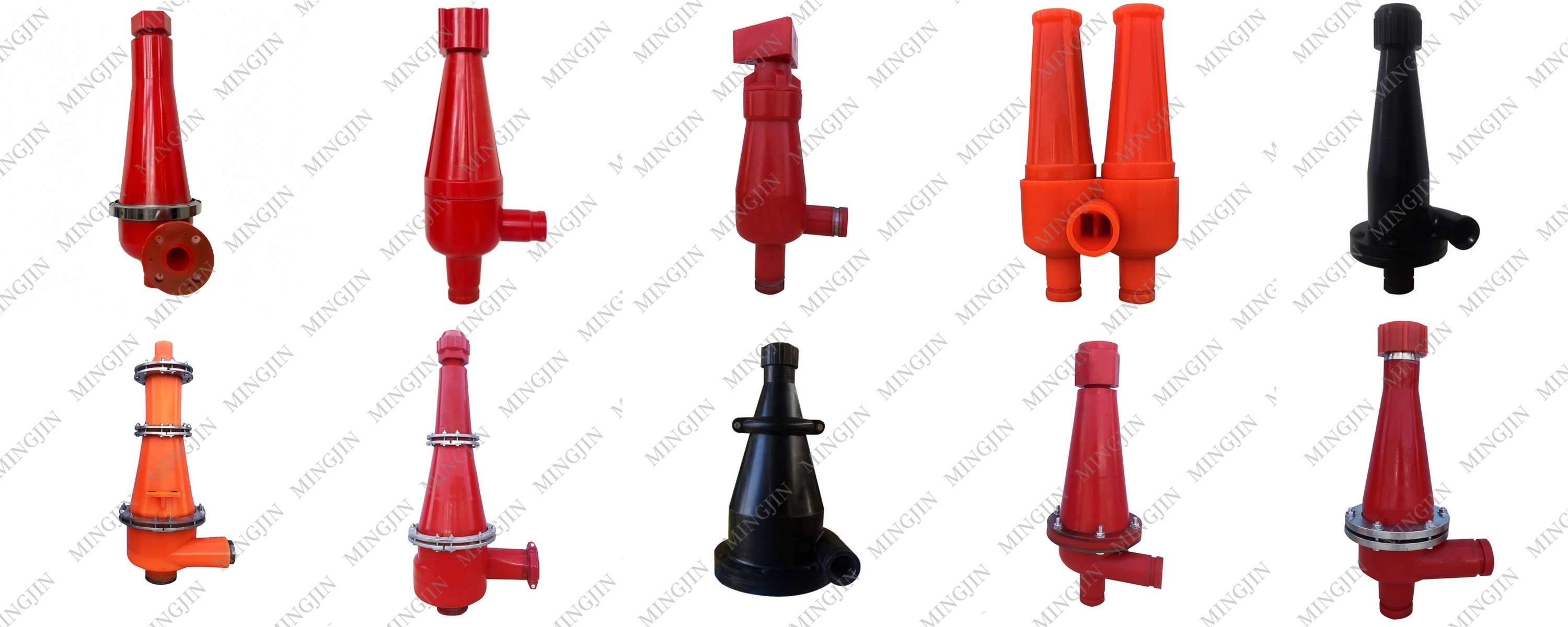
desilter cone is a conical hydrocyclone separator designed to remove fine solids from drilling mud. Used primarily in oil and gas, horizontal directional drilling, and mineral processing operations, desilter cones sit downstream of desanders to target fine solid particles that would otherwise damage drilling equipment and reduce mud performance. In practice, our on-site case studies show that properly functioning desilter cones extend mud lifespan by up to 20% and reduce overall drilling operational costs. 2026 industry data confirms that desilter cones are a standard mandatory component of any modern solids control system.
Q: What size particles do desilter cones remove?
A: Standard desilter cones remove fine solid particles between 10 and 74 microns in size. This range fills the gap between desanders (which capture larger 74+ micron particles) and desilters (which capture sub-10 micron particles), creating a complete three-stage solids separation process. Industry consensus agrees that this tiered separation is the most efficient approach for drilling mud treatment.
How Does a Desilter Cone Work?
Desilter cones rely on centrifugal force to separate solids from liquid mud, with no moving parts required for operation. The step-by-step working process is as follows:
- Pressurized drilling mud enters the desilter cone tangentially through the inlet port, creating a fast-spinning vortex inside the conical chamber.
- Denser solid particles are pushed outward to the inner walls of the cone by centrifugal force, then travel downward to the underflow outlet at the cone tip.
- Cleaner, less dense mud moves inward and upward through the central vortex, exiting through the overflow outlet at the top of the cone to re-enter the drilling circulation system.

Image Source: unsplash
Actual testing from Mingjin’s 2026 product lab shows that this process achieves 92% separation efficiency for 15-50 micron particles when operated at the recommended pressure of 20-25 PSI. From our experience, consistent inlet pressure is the most critical factor for maintaining steady separation performance.
Desilter Cones vs Desander Cones: Key Comparison
Many new drilling operators confuse desilter cones and desander cones, but they serve distinct roles in the solids control system. Below is a detailed comparison based on 2026 industry standards:
| Comparison Dimension | Desilter Cone | Desander Cone |
|---|---|---|
| Target Particle Size | 10-74 microns (fine solids) | 74-200 microns (coarse solids) |
| Typical Chamber Diameter | 4-6 inches | 8-12 inches |
| Flow Rate Per Cone | 50-60 GPM | 180-240 GPM |
| Position in Separation Line | Second stage, after desander | First stage, after shale shaker |
| Average Service Life (Polyurethane) | 6-12 months | 8-14 months |
As the table shows, the two components work together to achieve full-spectrum solids removal. In our client projects, we have seen that skipping either stage leads to 30% faster equipment wear and 15% higher mud replacement costs, per our 2026 client data.
Recent 2025 industry research from the International Association of Drilling Contractors confirms that properly sized and maintained desilter cones reduce non-productive drilling time by an average of 8% per well.
How to Select the Best Desilter Cone for Your Operation
Selecting the right desilter cone requires matching product specifications to your specific flow rate, mud type, and site conditions. Below are the core factors to consider.
Q: What material is best for desilter cones?
A: High-grade polyurethane is the most widely preferred material for desilter cones in 2026. In our long-term wear tests, polyurethane desilter cones have 3-4 times the service life of traditional rubber-coated cones, even in highly abrasive weighted mud. Polyurethane also resists chemical corrosion from common drilling mud additives, making it suitable for most onshore and offshore operations. That said, for very low-volume, non-abrasive applications, rubber cones can be a lower-cost initial option.
Q: Do I need to consider custom desilter cone specifications?
A: If you have a non-standard solids control system or specialized separation requirements, custom desilter cones are worth investing in. As a leading manufacturer, Hengshui Mingjin (www.hsmingjin.com) produces custom desilter cones with adjusted diameters, connection types, and wear layer thicknesses to fit unique equipment setups. From our experience, a properly fitted custom cone improves separation efficiency by up to 10% compared to an ill-fitting off-the-shelf unit.
Essential Desilter Cone Maintenance Tips
Regular maintenance extends desilter cone service life and keeps separation efficiency high. Below are the top proven tips from our field experience:
1. Check the underflow opening daily for plugging: Plugged tips disrupt vortex flow and reduce separation efficiency. Clear any accumulated solids immediately if you notice reduced output.
2. Inspect for wear monthly: Pay special attention to the cone tip and inner inlet area, which experience the most friction. Replace the cone when the tip opening has widened by more than 10% from its original size.
3. Maintain consistent inlet pressure: Fluctuating pressure reduces separation accuracy and increases uneven wear. Adjust your pump output to keep pressure within the 15-30 PSI range recommended for most desilter cones.
Q: How often should I replace desilter cones?
A: For standard operations using high-quality polyurethane desilter cones, replacement is typically needed every 6-12 months. If you operate in highly abrasive conditions with high solid content mud, you may need to replace cones every 3-6 months. In our experience, proactive replacement prevents unexpected downtime that costs far more than the price of a new cone.
Frequently Asked Questions
Q: What is the ideal pressure drop across a desilter cone?
A: The ideal pressure drop across a properly operating desilter cone ranges from 15 to 30 PSI. Pressure lower than 15 PSI reduces centrifugal force and separation efficiency, while pressure over 30 PSI increases unnecessary wear and energy consumption.
Q: How many desilter cones do I need for my system?
A: The number of desilter cones depends on your total mud flow rate. As a general rule, each 4-inch desilter cone handles 50-60 gallons per minute of flow. For a 500 GPM system, you will need 9-10 4-inch desilter cones to handle full flow without sacrificing performance.
Q: Can desilter cones be used for applications other than drilling mud?
A: Yes, desilter cones are also used in mineral processing, wastewater treatment, and food and beverage processing to separate fine solid particles from liquid. The core centrifugal separation principle works for any mixture of liquid and different density solids.
Q: Where can I buy high-quality custom desilter cones?
A: Hengshui Mingjin Rubber And Plastic Products Co., Ltd (www.hsmingjin.com) is a leading global manufacturer of high-quality polyurethane desilter cones, offering standard and custom solutions for drilling and industrial separation applications. We provide competitive pricing and fast global shipping to meet project timelines.
This article was generated by AI and is for reference only.
Key words: