Application of composite hoses in the industry
May 10,2025
let's comprehensively explore the application of composite hoses in the industry.
let's comprehensively explore the application of composite hoses in the industry.
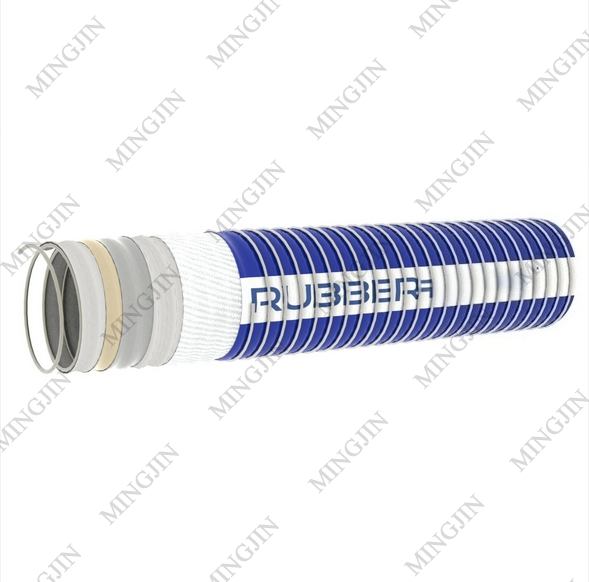
Composite hose is a flexible conveying pipeline made of various materials (such as polyethylene PE, polyamide PA, polyester PET, polyvinylidene fluoride PVDF, polytetrafluoroethylene PTFE, aluminum foil, stainless steel wire, textile fibers, etc.) through a composite process. It combines the strength of metal hoses with the corrosion resistance of plastic hoses, while also having unique advantages such as light weight, small bending radius, and fatigue resistance.
Its core structure is usually a "multi-layer composite", with each layer carrying out different functions:
·Inner lining layer: In direct contact with the medium, it is required to be resistant to chemical corrosion (such as PTFE, PE).
·Barrier layer: usually made of aluminum foil, used to prevent steam or gas from penetrating and maintain the purity of the medium.
·Reinforcement layer: woven with high-strength fibers or stainless steel wire, providing pressure and tensile resistance.
·Outer coating: wear-resistant, weather resistant, UV resistant (such as polyurethane PUR, rubber).
The main application industries of composite hoses
Composite hoses have been widely used in fields that require high safety, environmental protection, and medium purity due to their excellent performance.
1. Petrochemical industry
This is the largest and most important application area for composite hoses.
·Dock loading and unloading arm: used for loading and unloading crude oil, refined oil, and chemicals between ships and shore tanks. Compared to metal hoses, it is lighter, easier to operate, and does not generate sparks due to collisions, making it extremely safe.
·Tank truck loading and unloading: connecting railway tank trucks or road tank trucks for loading and unloading liquid chemicals.
·Process transportation within the factory area: used for short distance and intermittent transportation of various corrosive media such as acids, alkalis, solvents, and polymer monomers in chemical plants.
2. Chemical transportation and storage
·Transportation of various chemicals: precise transportation from strong acids (such as sulfuric acid, hydrochloric acid) to strong bases (such as sodium hydroxide), as well as various organic solvents (such as benzene, acetone, alcohols). Different lining materials can be selected based on the characteristics of the medium (such as PTFE for extreme corrosive environments).
·Food grade and pharmaceutical grade chemicals: Use materials that comply with FDA/USP standards (such as white PE lining) for transporting edible oils, ethanol, glycerol, pharmaceutical raw materials, etc., ensuring that the medium is free of contamination.
3. Oil and gas industry
·Liquefied petroleum gas (LPG)/liquefied natural gas (LNG) loading and unloading: Specialized composite hoses have extremely low permeability and excellent low-temperature toughness, used for transporting low-temperature liquefied gases.
·Gas station oil delivery: used for connecting underground oil tanks to gas dispensers, with good oil resistance, flexibility, and easy installation.
4. Food and pharmaceutical industry
·Food raw material transportation: such as milk, beer, wine, juice, edible oil, chocolate, syrup, etc. Require hoses to be non-toxic, odorless, easy to clean (CIP cleaning), and comply with food hygiene standards.
·Transfer of pharmaceutical raw materials: In the clean area, use high-purity and easy to clean composite hoses for material transfer to avoid cross contamination.
5. Shipbuilding industry
·Ship loading and unloading: In addition to the dock loading and unloading mentioned above, the ship itself also uses composite hoses for the transportation of ballast water, fuel oil, and lubricating oil.
·Offshore Oil Transport Platform (FPSO): Used for transporting crude oil between the platform and oil tankers, it can adapt to harsh swaying and wind conditions at sea.
6. Other industrial sectors
·Coatings and paint industry: transporting various resins, solvents, and finished paints.
·Electronics industry: transporting high-purity chemical reagents such as etching solutions, developing solutions, etc.
·Wastewater treatment: transporting certain chemical additives.
The main advantages of composite hoses compared to traditional metal hoses
Characteristic composite hose Traditional metal hose (such as corrugated hose)
Extremely lightweight, easy to operate, reduces labor intensity, very heavy, inconvenient to operate
Excellent flexibility, small bending radius, less prone to fatigue fracture, and repeated bending can easily lead to metal fatigue
Highly corrosion-resistant, the inner lining can be customized according to the medium, but its applicability is limited. It relies on stainless steel material and is sensitive to chloride ions
High safety, no sparks, anti-static design, grounding safety. Metal collision may generate sparks, posing a safety hazard
Low residual medium, smooth inner wal
Key words: