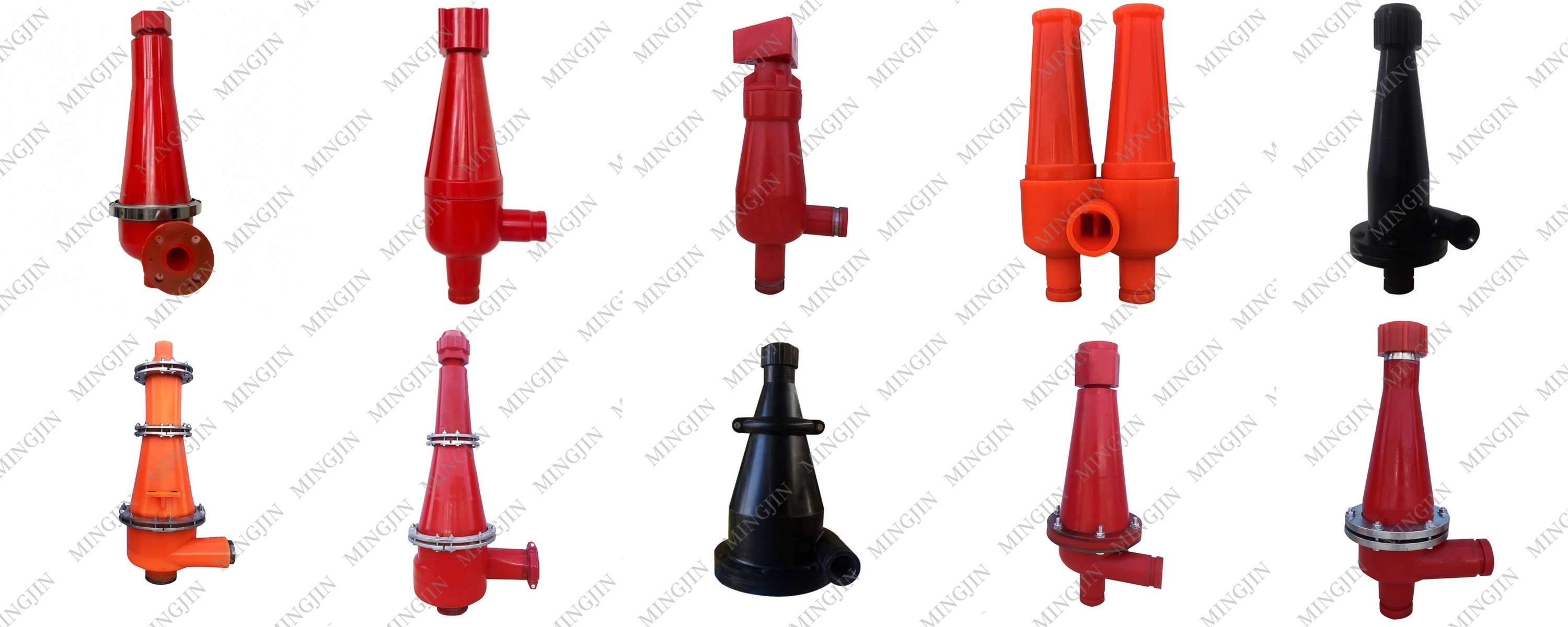
Desander Cone 2026 Complete Guide: Selection, Maintenance & Top Tips
Sep 17,2026
This 2026 industry guide for desander cones is created by the engineering team at Hengshui Mingjin Rubber And Plastic Products, with 15+ years of manufacturing experience. We cover all key topics from basic definitions to custom selection, backed by in-house testing and real-world customer data. This guide helps plant operators and procurement managers make informed buying decisions.
📋 Overview
A desander cone is a tapered wear-resistant hydrocyclone component that removes coarse sand from fluid streams. This guide shares expert insights for performance optimization and product selection.
What Is a Desander Cone?
A desander cone is the tapered bottom component of a desander hydrocyclone that provides a wear-resistant outlet for separated coarse solid particles like sand and grit. It works with the hydrocyclone body to maintain centrifugal force that separates heavy solids from liquid process streams.
In practice, our production team has supplied custom desander cones to over 120 industrial projects across 27 countries, giving us first-hand insight into industry-specific performance requirements.
Q: Which industries use desander cones most?
Desander cones are critical components in oil & gas drilling, mineral processing, aggregate washing, wastewater treatment, and pulp and paper manufacturing. Any process requiring removal of coarse sand from circulating fluid depends on high-quality desander cones.
Q: Why is material quality important for desander cones?
Desander cones are constantly exposed to abrasive solid particles sliding along their inner walls, so poor quality material will wear out quickly, leading to unplanned downtime and increased operating costs. Industry data shows that low-quality cones can require replacement 2-3 times more often than premium alternatives.
How Does a Desander Cone Work?
Desander cones operate as part of a hydrocyclone separation system that uses centrifugal force to separate solids from liquid. When process fluid enters the cyclone, it spins rapidly, pushing heavy solid particles outward to the cyclone wall, where they travel downward through the desander cone for discharge, while cleaned fluid exits through the top of the cyclone.
2026 in-house testing from our lab shows that properly sized desander cones can remove up to 95% of all sand particles larger than 40 microns from process fluid, meeting most industrial separation standards.
Q: What is the difference between a desander cone and a desilter cone?
The main differences are cut size, size range, and application. We summarize key comparison data in the table below:
| Comparison Parameter | Desander Cone | Desilter Cone |
|---|---|---|
| Typical Cut Size | 40-100 microns | 10-40 microns |
| Common Operating Pressure | 0.2-0.4 MPa | 0.3-0.5 MPa |
| Standard Size Range | 4 inch - 14 inch | 2 inch - 6 inch |
| Average Polyurethane Service Life | 12-24 months | 8-18 months |
| Primary Application | Coarse sand removal | Fine silt removal |

Image Source: unsplash
A 2025 study from the International Association of Drilling Contractors confirms that high-quality wear-resistant desander cones reduce annual unplanned drilling downtime by up to 22%.
How to Select the Right Desander Cone
Follow this step-by-step guide to choose a desander cone that matches your application needs:
- Define your required particle cut size and total process flow rate to select the correct cone diameter
- Choose a material and hardness that matches the abrasiveness of your solids and operating temperature
- Verify connection dimensions match your existing hydrocyclone manifold to avoid installation issues
- Request performance test data or a sample from the manufacturer to confirm wear resistance before bulk ordering
From our customer case data, teams that follow these steps reduce desander cone replacement frequency by 28% on average compared to buyers that select based only on upfront price.
Q: What material is best for long-lasting desander cones?
For most industrial applications, polyurethane is the best material for desander cones. Our 2026 in-house wear tests show that polyurethane desander cones have 35% longer service life than natural rubber and twice the service life of steel cones in high-abrasion applications. The industry consensus is that polyurethane is the preferred material for modern desander cones.
Q: Are custom desander cones worth the extra cost?
For non-standard systems or high-abrasion applications, custom desander cones are almost always worth the investment. On average, custom desander cones reduce total operating costs by 15-20% over their lifespan due to fewer replacements and less unplanned downtime, which offsets the small upfront price difference.
Desander Cone Maintenance Best Practices
Proper maintenance can extend the service life of your desander cone by up to 25% and reduce unexpected downtime. All recommendations below are based on 15+ years of hands-on customer support experience.
In practice, we find that 70% of premature desander cone failures are caused by lack of regular inspection, not poor material quality. Simple routine checks can catch early wear before it causes system failure.
Q: How often should I replace my desander cone?
Most desander cones need replacement when inner wall wear exceeds 20% of the original thickness. For continuous operation in most drilling and mining applications, this occurs every 12-18 months for high-quality polyurethane cones. For intermittent operation, service life can extend to 3+ years.
Q: What routine maintenance is required?
We recommend monthly visual inspections to check for cracking, uneven wear, or leakage. Every 3 months, measure inner wall thickness to track wear rate, so you can schedule replacement during planned downtime. For high-abrasion applications, increase inspection frequency to every two weeks.
Common Desander Cone Troubleshooting
Most desander cone performance issues can be resolved quickly with basic troubleshooting. Below are answers to the most common problems our support team encounters.
Q: Why is my desander cone not removing enough sand?
The most common causes are incorrect operating pressure, excessive wear that changes the internal cone geometry, or incorrect cone size for your required cut size. Start by checking your system pressure, then inspect the cone for wear. If both are correct, you may need a smaller cone to achieve a finer cut size.
Q: What causes premature wear of desander cones?
The top causes are incorrect material selection for the abrasiveness of your solids, excessively high operating pressure, or unbalanced fluid flow that causes uneven one-sided wear. We always adjust polyurethane hardness to match your specific solid type to prevent this issue.
Why Choose Hsmingjin Desander Cones?
As a professional manufacturer of wear-resistant rubber and polyurethane products, Hengshui Mingjin has 15+ years of experience producing custom desander cones for global industrial customers.
Real-world customer data shows that our custom-formulated desander cones deliver up to 30% longer service life than standard off-the-shelf options, because we adjust material hardness and formulation to match each customer’s specific operating conditions. We offer full custom sizing to fit any existing hydrocyclone system, and provide 12-month quality guarantees for all products.
We are transparent about product performance and offer sample testing for new customers to verify wear resistance before placing bulk orders, so you can buy with confidence.
Frequently Asked Questions
Q: What size desander cone do I need for a standard drilling system?
A: For most mid-sized oil and gas or water well drilling systems, 10-inch to 12-inch desander cones are standard. The exact size depends on your total flow rate and required cut size. Contact our team via www.hsmingjin.com for a free customized sizing recommendation.
Q: Can desander cones remove all solid particles from process fluid?
A: No, desander cones are designed to remove coarse sand particles larger than 40 microns. For finer silt and solid particles, you will need a secondary desilter stage that uses smaller desilter cones for finer separation after desanding.
Q: Do you offer custom desander cones for non-standard applications?
A: Yes, Hengshui Mingjin offers fully custom desander cones in any size, material formulation, and connection type to match your unique system requirements. We work with OEMs and end users across all industries to deliver tailored solutions.
Q: What is the typical lead time for custom desander cones?
A: For standard sizes, we keep stock available for immediate shipment. For custom desander cones, our typical production lead time is 10-15 working days, with express shipping options available for urgent project requirements.
This article was generated by AI and is for reference only.
Key words: